I went up Cwm Cadlan after work hoping for the male Hen Harrier that has been seen several times by other people but not by me and it was a no show again. It was peaceful up there last night, I found some frog spawn in a ditch so it must be spring now on the Cadlan and apart from 4 ravens that was it. I saw more in work in Penywaun including a fly over Skylark and a Red Kite. When I was waiting to see if any thing popped out I noticed that the commoners on Waunwen are burning it again, I hope they don't get too carried away and burn the lot. It must be hard for the skylarks which arrived over the last couple weeks to put up with this and any snakes or lizzards must suffer too.
Friday, 11 March 2016
Wednesday, 9 March 2016
Sunburst Over Salthouse Marsh
Very mixed weather here in Norfolk, yesterday being the first dry day (don't ask about today's weather!), so I headed for Cley. I dumped my brother off at the west bank car park, as he was going to walk to the Blakeney Point. As we arrived, a Barn Owl passed close by, so stopping quickly, we got out and watched it quartering the wet fields just behind the shingle bank. After a couple of minutes, it was out of sight, so I made my way to the reserve centre car park and headed for the east bank, hoping for Bearded Reedling. I neither saw nor heard any as I walked along, but the walk was nevertheless enlivened by skeins of Brent Geese and a couple of Avocet flying across Cley Marshes into Salthouse Marsh. A On the sea were lots of Cormorant and a few Red-throated Diver.
Although it was dry, it was overcast and flipping cold, the deceptively gentle breeze seemingly blowing straight through me. Back at the centre, to buy a hide permit, I was told that no one had seen or heard any Beardies for quite a while. I had a cup of tea and one of their huge scones, in the cafe and was told by the bloke serving me, that there were Lapland Buntings on the marshes at Blakeney, so after a hurried break, I drove there and walked the path into the marshes.
At the place indicated by my informant, there was nothing to be seen, so I walked on another half a mile or so, scanning the likely looking areas. There were lots of Skylarks and a few Meadow Pipits singing, making it seem springlike.
I headed back to the original spot and was joined by a few more birders and toggers, and had only been there a few minutes before someone called and there was a lovely male Lapland Bunting, already acquiring its breeding plumage. It was soon joined by a female and another male, with less well developed plumage. What stunning birds and a lifer for me too. Someone had been putting food down for them and so they fed in plain sight and quite close for several minutes, before hopping back into the more heavily vegetated areas. While they fed in the open, they were harassed by an equally stunning and very bolshy Reed Bunting.
Back at Cley, I did a tour of the hides, but apart from a lot Black-tailed Godwits, a few of which were looking very colourful as their breeding plumage was quite advanced, the only other species of note were a few Ruff and an apparently larger flock of Avocets than normal for Cley. They certainly made a fine sight.
The light was going by now, as the cloud thickenned and the forecast rain was approaching, so I packed up and made my way back to Cromer.
The day before, I had visited the Great Wood at Felbrigg Hall, getting a few woodland species, including Marsh Tit for my trip list. Amongst the fungi seen were these Xylaria carpophila, on old beech mast.
![]() |
| Salthouse Marsh |
At the place indicated by my informant, there was nothing to be seen, so I walked on another half a mile or so, scanning the likely looking areas. There were lots of Skylarks and a few Meadow Pipits singing, making it seem springlike.
I headed back to the original spot and was joined by a few more birders and toggers, and had only been there a few minutes before someone called and there was a lovely male Lapland Bunting, already acquiring its breeding plumage. It was soon joined by a female and another male, with less well developed plumage. What stunning birds and a lifer for me too. Someone had been putting food down for them and so they fed in plain sight and quite close for several minutes, before hopping back into the more heavily vegetated areas. While they fed in the open, they were harassed by an equally stunning and very bolshy Reed Bunting.
Back at Cley, I did a tour of the hides, but apart from a lot Black-tailed Godwits, a few of which were looking very colourful as their breeding plumage was quite advanced, the only other species of note were a few Ruff and an apparently larger flock of Avocets than normal for Cley. They certainly made a fine sight.
The light was going by now, as the cloud thickenned and the forecast rain was approaching, so I packed up and made my way back to Cromer.
The day before, I had visited the Great Wood at Felbrigg Hall, getting a few woodland species, including Marsh Tit for my trip list. Amongst the fungi seen were these Xylaria carpophila, on old beech mast.
![]() |
| Xylaria carpophila |
Sunday, 6 March 2016
Gloucestershire
Martin Bevan, Mike Hogan and myself had an early start this morning to go for the Penduline Tits at Horsbere in Gloucester. Arriving later than expected due to be diverted over the Blorenge at Abergavenny we were soon looking at two superb male Penduline Tits. Unfortunately they kept their distance so only a few record shots were taken. Other birds noted here were Reed Bunting, Stonechat, Long Tailed Tits and a possible Chiffchaff.
Next we drove back into the Forest of Dean where our first stop was Cannop Ponds where the Mandarin Ducks were ridiculously close. Other wildfowl were Gadwall, Tufted Ducks and Little Grebe. Unusually no Marsh Tit seen or heard.
We then went to Parkend Cricket Ground where Hawfinches have been coming to seed. Just before we got there one had flown into a high tree but had departed just as quickly. We stayed for awhile but nothing was happening so we drove up to the church for a walk around the woods where our success rate in the past has been quite high. Not today though, very quiet overall with little seen. It was then back to the cricket ground where lots of birds were now coming to the seeds mainly Chaffinch, Greenfinch, Great Tits and Nuthatch. No sign of Hawfinch. Time to move on again.
We drove the short distance to Nags Head hoping for a change of luck. Walking up the hill away from the centre we started talking to a man who had had a brief glimpse of a Lesser Spotted Woodpecker a few hours before out of the Campbell Hide also some Hawfinches coming down to drink at the pond. We decided to try the hide. Again not much activity although we had 14 deer walking through and I managed to get Hawfinch high in a tree which was very difficult due to the very narrow windows of the hide.
Third time lucky we thought so back to the cricket ground. Martin heard some Hawfinches (probably 3) in some of the Yew Trees unfortunately they could not be located. Then all of a sudden one flew across to the tree which the seed was below. After what seemed an eternity a beautiful male Hawfinch dropped down and started feasting on the seed. It was at this point after driving off and getting about 200 yards away Mike decides he has lost a glove. After a quick search of the car I had to drive back and we had to retrace our steps and look for the glove. No joy so another search of the car with the same result. Mike blames everyone including another birder who did not even come within 100 yards of us. Mike has another pair with him so we carry on
We then decided to have a walk around Crabtree Hill hoping to pick up the Great Grey Shrike but has in previous years with this bird it alluded us although other people observed it. Getting back to the car park we find a very confiding Treecreeper and Martin and myself start photographing it. Mike decides to join in but finds his screen completely dark and thinks I cannot remember putting the lens cap on. On looking at the end of his lens what does he find but his glove jammed in the lens hood. It could only happen to him.
![]() |
| Penduline Tit |
![]() |
| Mandarin |
![]() |
| Mandarin |
| Mandarin |
![]() |
| Blue Tit |
![]() |
| Goldcrest |
![]() |
| Treecreeper |
Saturday, 5 March 2016
Who needs the fab 4
Mt pan-species list took a big jump after spending today down at Port Enyon. I've still got some work to do, but it looks like at least 40 species will be added to my year total. Only 4 new birds but those included Purple Sandpipers and three Dartford Warblers. A nice find by a rock pool was a Otter latrine with one spraint that was no more the a couple of hours old, just a pity I couldn't find the Otter!
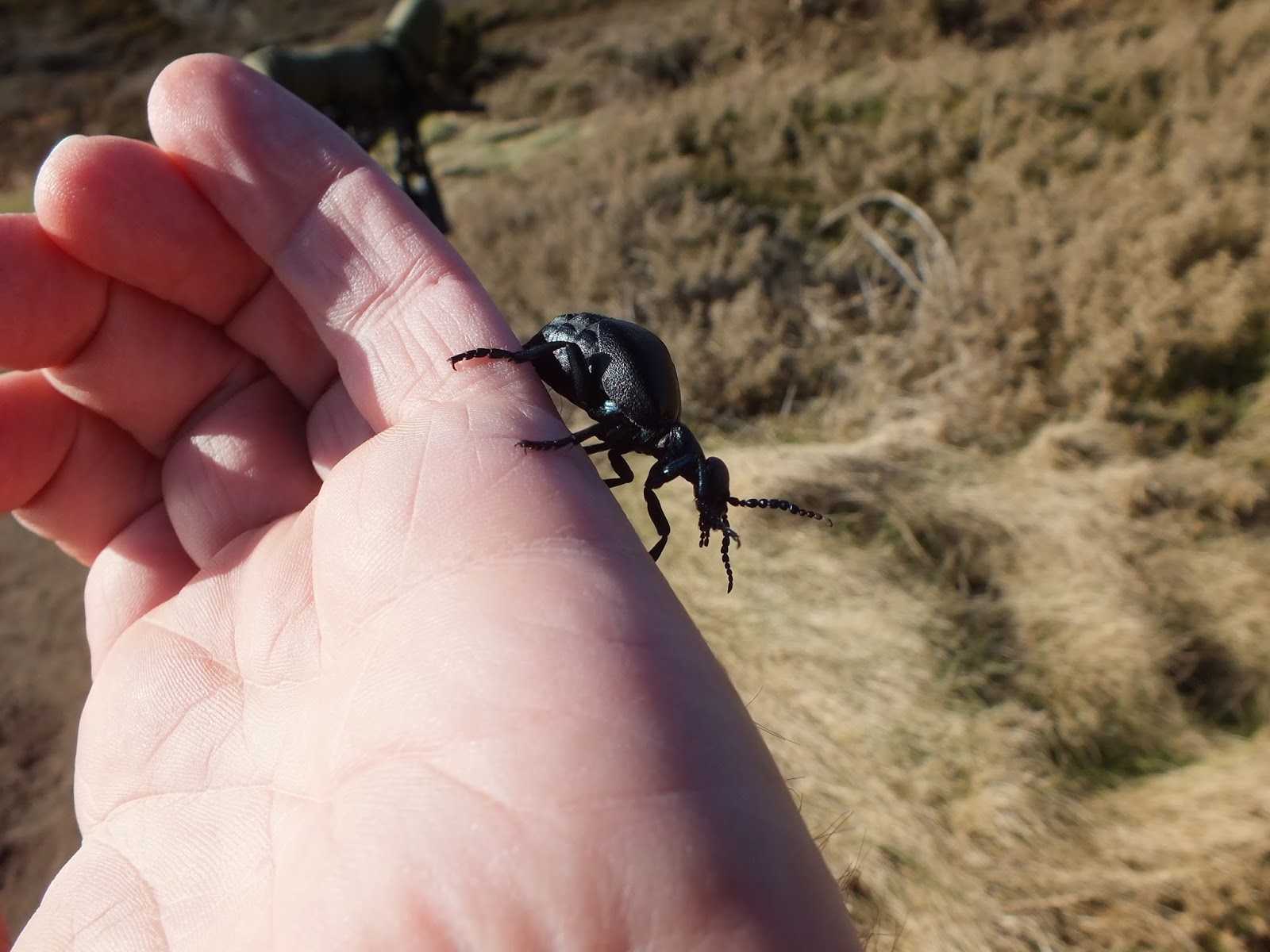
Insects, have finally made it onto my year list. 3 species of bee - 1 Honey Bee + 2 other species yet to be identified, 2 Hoverflies, a couple of spiders and a mite, Pill Woodlouse, a couple of Weevils. The best, however was saved to later in the day, when I was walking along the footpath below the cliffs when I spotted a large, dark, Beetle in the grass - A Dor?, No!, Bloodt-nosed?, No It was easilly identifiable as an Oil Beetle Meloe proscarabaeus.
This is one of my "most wanted" insects - I saw one in Spain a few years back, but, really wanted to get one in the UK. As a Beetle, it's even better than John Lennon!
Friday, 4 March 2016
This Is the News on the Herring Gull with Rings
Right Dan got back to me pretty quickly and said that the bird is from Somerset and ringed by a chap called Mike Bailey as part of a colour ringing project which began in Spring 2011. He has been colour ringing LBB Gulls and Herring Gulls as part of a study looking at the survival of rehabilitated birds at Secret World Wildlife Rescue Centre in East Hillspill in Somerset and this is some of the report. If you want it all you willl have to email and I will send it. Most of these rehabilitated Gulls are young ones [ as S; 032 was when it was ringed ] They are too young to fly and have been found by members of the public from and come from the colonies nesting in nearby urban areas and these are ones that could not, for one reason or another be repatriated with their parents and have been reared at Secret World. Here is the information about Red/White S;032. The Species was recorded as a Herring Gull. The B.T.O ring is GR37270 and it was released very nearby at Burnham On Sea in Somerset on July 22 2011. He says there is some history on the bird and maybe it's adopted Porthcawl as home or maybe its his wintering ground. It was seen three times before me at the Eastern Promenade Porthcawl and thats where I had it. The first dates were 17 March 2014 and than again in October and not seen than again until 2015 and 12 February where it was seen sitting on a bin with fishing line tangled around his bill. It's great to think he made it from that. All previous sightings are by C Edwards and then my record on 21 February 2016. This is what Secret World said about the project. This has been a very interesting project and the Wildlife Sanctuary is delighted with the recoveries so far. The study clearly shows that many of the birds are surviving. This was the main point of the project and 2013 was our last year of ringing those Gulls as we feel that we have achieved our objective. We will of course be following the fortunes of the 250 Colour Ringed birds with great interest, hopefully for many years to come. This was a great bit of information and if they read this would like to thank Dan and Mike Bailey for the information and will make me look closer from now on .
Tuesday, 1 March 2016
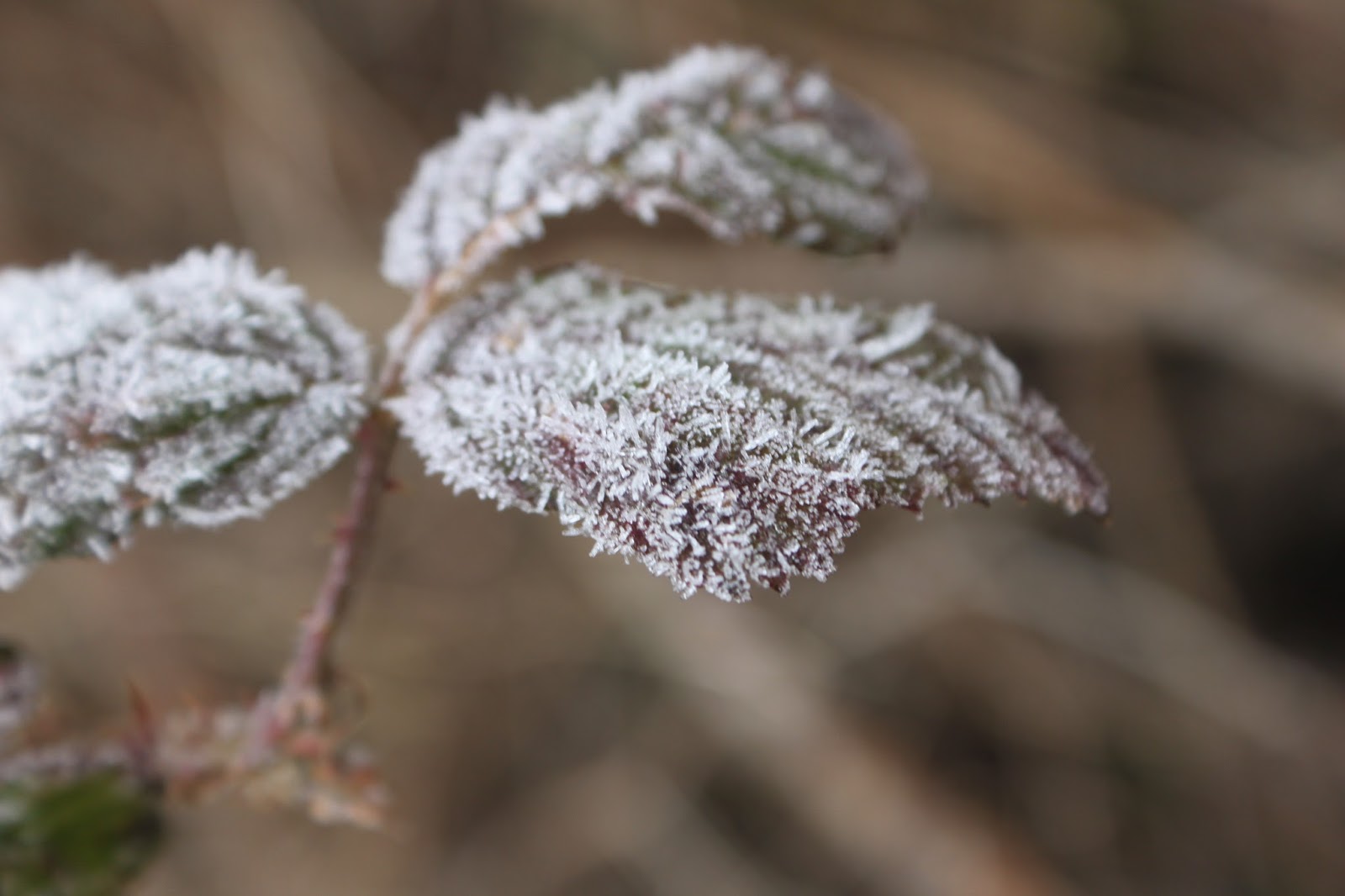
Frost Shots form Abercwmboi Lake Yesterday
I visited the lake to see if the young swans were still present and thought it would be nice to try my adpater out a bit more. Think of all the poo shots I could take and yes with a peg on my nose.
Subscribe to:
Posts (Atom)